A Fragile Copy
"If this Writing be not acceptable ... it is but a rough draught"
James Harrington, "Epistle to the Reader," The Commonwealth of Oceana (1656)

"When as modern readers we open the early modern book, we are often confronted with the teeming business of the page, with traces of multiple hands and dissonant voices."
Kevin Sharpe and Steven N. Zwicker, Reading, Society and Politics in Early Modern England

James Harrington
James Harrington, c. 1658. Harrington was an English political theorist and author.
Except perhaps in certain academic circles, James Harrington isn't a name that is widely known today. When I began this project with the intention of creating a digitial exhibit of an early modern book, I certainly hand't heard of Harrington or his most notable and remembered work, The Commonwealth of Oceana, first printed in 1656.
Harrington was an English political theorist and author who lived from 1611 to 1677. While his name may not be familiar, biographer Rachel Hammersley notes that "for more than a century after his death his name continued to be invoked, his pamphlets read, and his theories applied in new contexts, both at home and abroad" (2).
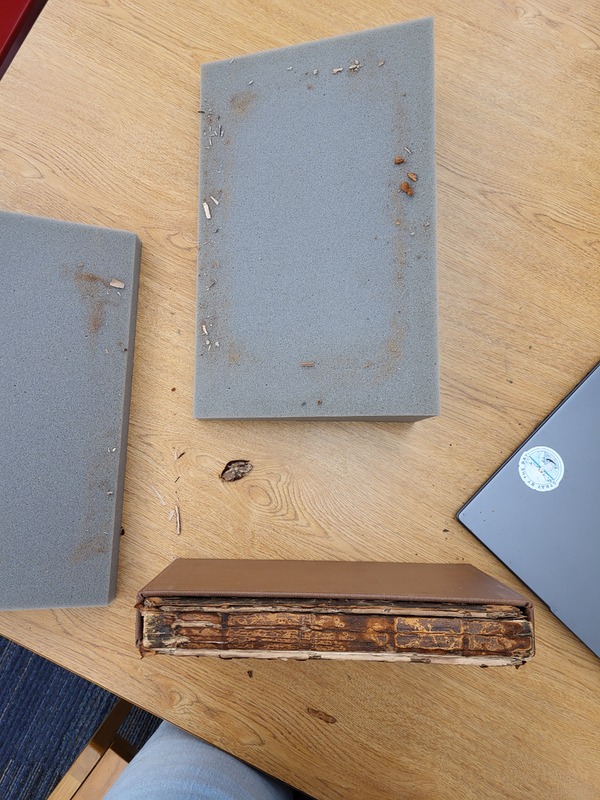
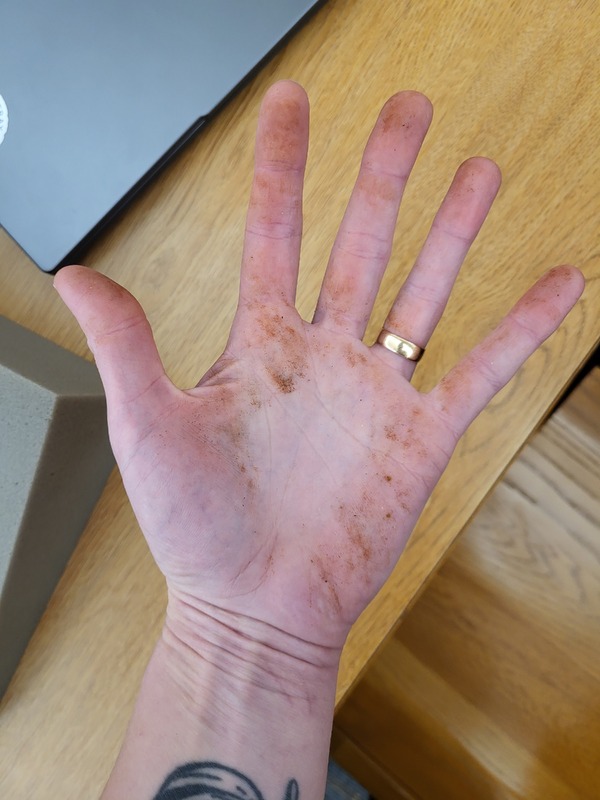
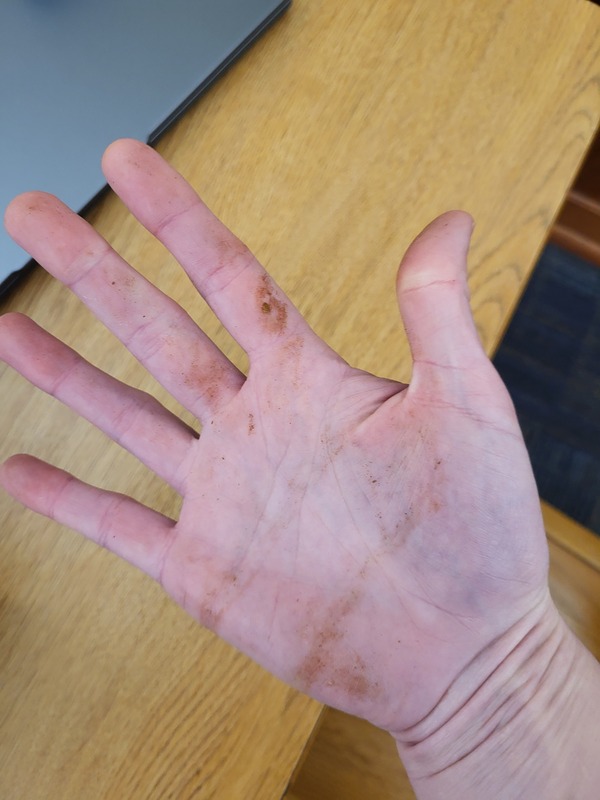
The name finally reached me, along with a copy of Oceana, in my library's Special Collections, where I was viewing several early modern books, looking for one I could study and digitize for this project. The Special Collections' copy of Oceana is kept in a protective clamshell box, a hard case designed to safeguard rare or fragile books. As I pulled it from its cover, I was immediately drawn and equally repelled by the book's condition. Removing it from the clamshell was enough to produce a small pile of paper debris that had once constituted The Commonwealth of Oceana. I saw the book's fragile state as a strong reason for digital preservation. At the same time, I cringed at the physical damage from handling and wondered how many times I would need to take it out and put it back inside its tight, protective box if I decided to work with it.
Images taken in the Special Collections' reading room documenting the fragile condition of Oceana.


"[Scholar Sten Bodvar] Liljegren dismissed all the previous editions of Oceana as 'very unsatisfactory', listing various errors in them that hindered the reader's sense of Harrington's meaning."
Rachel Hammersley, James Harrington: An Intellectual Biography
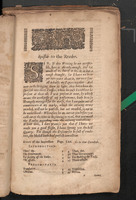
Oceana, Epistle and Errata Table page 1
Harrington's epistle to the reader and the beginning of the table of errata in The Commonwealth of Oceana (1656).
If I was unsure about the book's condition, however, its contents nudged me toward choosing Oceana for my project. It wasn't Harrington's political philosophy or his allegorical utopian republic that caught my attention, but rather the first few pages of the book, before the actual text begins. Here, Harrington addresses his reader in an epistle, writing, "if this Writing be not acceptable ... it is but a rough draft." The suggestion that a printed volume could be only a rough draft was funny to me, and yet it was confirmed by the table of errata that followed the epistle. Here was a seemingly exhaustive list of Errors of the Impression that could be found throughout the text, as well as instructions for the reader to make corrections.
I turned to the first page the table indicated would contain an error and happily found the typo, along with a handwritten correction made by a previous reader. As I flipped thorugh the book, I continued to find corrections written in the margins of pages: evidence of the reader completing Harrington's rough draft.
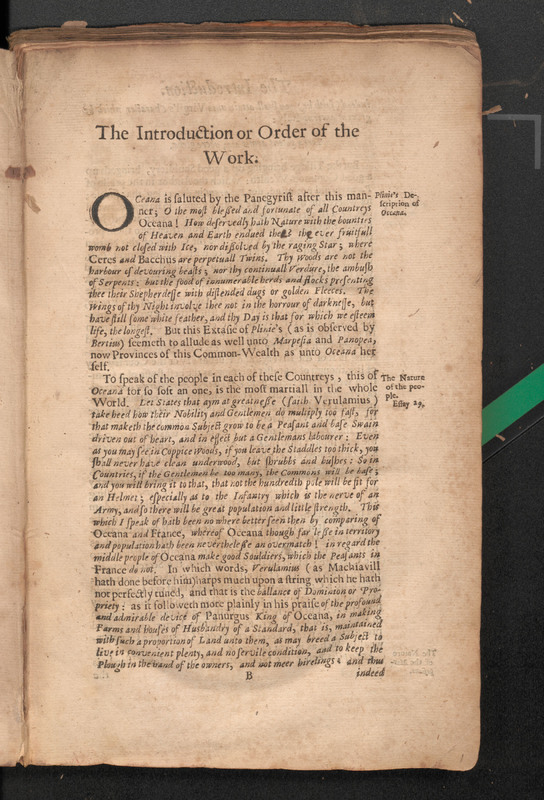
Page 1 of Oceana's introduction contains the first error identified in the errata table. An early reader of Special Collections' copy corrected the error in line 4 by hand.